Does a CRM Actually Pay for Itself?
You're not just paying for a CRM — you're paying for every deal you lose without one. Here's the real ROI math most founders skip.
 Dr. Andreas Fruth
The Deal That Should Have Closed
Last year, a founder I know had a prospect ready to sign. €4,200 annual contract. The prospect asked for a revised quote on Tuesday. The founder meant to send it Thursday. But a product issue ate his week, and by Monday the prospect had signed with someone else.
One forgotten follow-up. One lost deal. That €4,200 would have paid for his CRM subscription for over 18 years.
What You're Actually Spending Without a CRM
Most founders think the choice is "pay for a CRM" or "save that money." But not having a CRM isn't free. You're paying in ways that don't show up on an invoice.
Here's what I've seen eat founders alive:
- Lost deals from missed follow-ups. You forget to send the proposal. The prospect moves on. This happens more than anyone admits.
- Hours spent on manual tracking. Updating spreadsheets, searching email threads, copying notes between apps. I've talked to founders spending 5-8 hours a week on this.
- Bad decisions from bad data. When your pipeline lives in your head or a messy spreadsheet, you can't trust what it tells you. You chase the wrong deals and ignore the right ones.
The question isn't "can I afford a CRM?" It's "can I afford not to count what I'm already losing?"
The Math Nobody Does
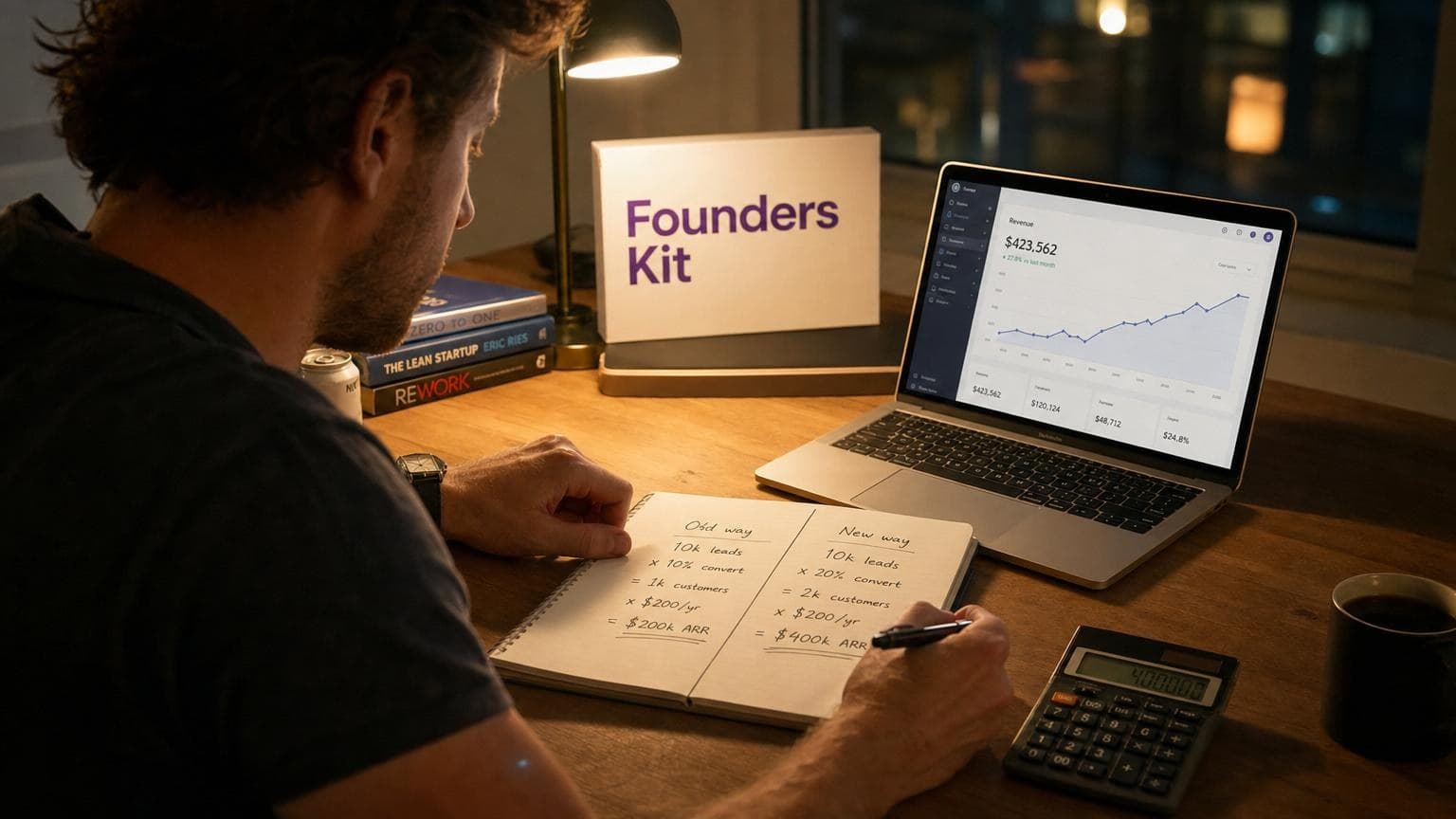
Let's make this concrete. Say you close 10 deals a year at an average of €2,000 each. That's €20,000 in annual revenue.
If poor follow-up or lost context costs you even two of those deals, you're leaving €4,000 on the table. A good CRM costs less per month than a single business lunch. Do the math on that return.
I've seen founders lose four out of seven deals purely because they went quiet at the wrong moment. Not because the product was wrong. Not because the price was too high. Because nobody followed up.
One recovered deal pays for your CRM for years. Two recovered deals and it's not even a conversation.
The Hours You Don't See Disappearing
ROI isn't only about closed deals. It's about time.
When your CRM logs interactions, tracks pipeline stages, and reminds you what's due today, you stop spending mornings piecing together context from three different apps. I used to burn 40 minutes every morning just figuring out where I left off. That's over 170 hours a year — more than four full work weeks.
Those hours don't show up as a line item, but they're real. Every hour you spend on admin is an hour you're not spending on the call that closes the deal.
A CRM doesn't just save deals. It gives you back the time to close more of them.
"But I Only Have a Few Deals"
I hear this a lot. "I don't have enough deals to justify a CRM." Here's what I've realized: the fewer deals you have, the more each one matters.
When you're running 50 deals, losing one stings but you recover. When you're running 5 deals, losing one is 20% of your pipeline. You literally can't afford to drop the ball.
Small pipelines don't need less structure. They need more. Because every single deal carries more weight. If you're still tracking things in a spreadsheet, these warning signs might sound familiar.
The founders who need a CRM most are often the ones who think they don't.
So Does It Pay for Itself?
I'll give you the honest answer: only if you use it.
A CRM that sits empty doesn't return anything. But one that takes 30 seconds to update — where you tell Kit what happened on a call and it logs everything — that's a system you'll actually stick with. The ROI comes from consistency, not complexity.
Here's the bare minimum to see a return:
- Log your conversations. Even one sentence after each call. That context compounds fast.
- Check your daily briefing. Know which deals need attention before your inbox tells you.
- Trust the reminders. When your CRM says follow up today, follow up today.
That's five minutes a day. If those five minutes save even one deal a quarter, you're looking at thousands in recovered revenue against a few hundred in cost.
A CRM pays for itself the first time it reminds you of something you would have forgotten.