The CRM for Realtors Who'd Rather Be Showing Houses
You didn't get into real estate to type notes into a CRM. Here's the CRM for realtors who log deals from their car, not a desk.
 Dr. Andreas Fruth
What a CRM for Realtors Actually Needs to Survive a Tuesday
Picture a Tuesday: four showings between 9am and 3pm, twenty minutes of driving between each one, and a mortgage broker calling while you're parallel parking. That's not a busy day for a realtor. That's a normal one. A CRM for realtors has to work inside that chaos, not around it, because you're never getting a quiet hour at a desk to "catch up on data entry."
I've talked to enough agents running their own book of business to know the pattern. You leave a showing and the lead is warm - the buyer's timeline, their must-haves, the offhand comment about the school district. Then you drive to the next one, and by the time you sit down that evening, half of it is gone.
The bottom line: a CRM that assumes you have downtime between meetings is a CRM built for someone else's job, not yours.
Nobody Shows Houses From a Desk
Most CRMs were built by people picturing a rep at a desk, refreshing a dashboard between calls. That's not how real estate works. You're in your car, on a sidewalk, standing in someone's kitchen while they decide if the light in the living room sells them on the house.
A traditional CRM wants its own slot in your day - open the laptop, click into the contact, find the right field, type the note, save. That's fine if you have five spare minutes at a desk. You don't. So the note either doesn't happen, or it happens three days later as a vague memory of "nice couple, liked the kitchen, I think."
The bottom line: if your CRM needs a dedicated block of time, it's competing with showings for your attention, and showings win every time.
Voice-Log the Lead Before It Evaporates
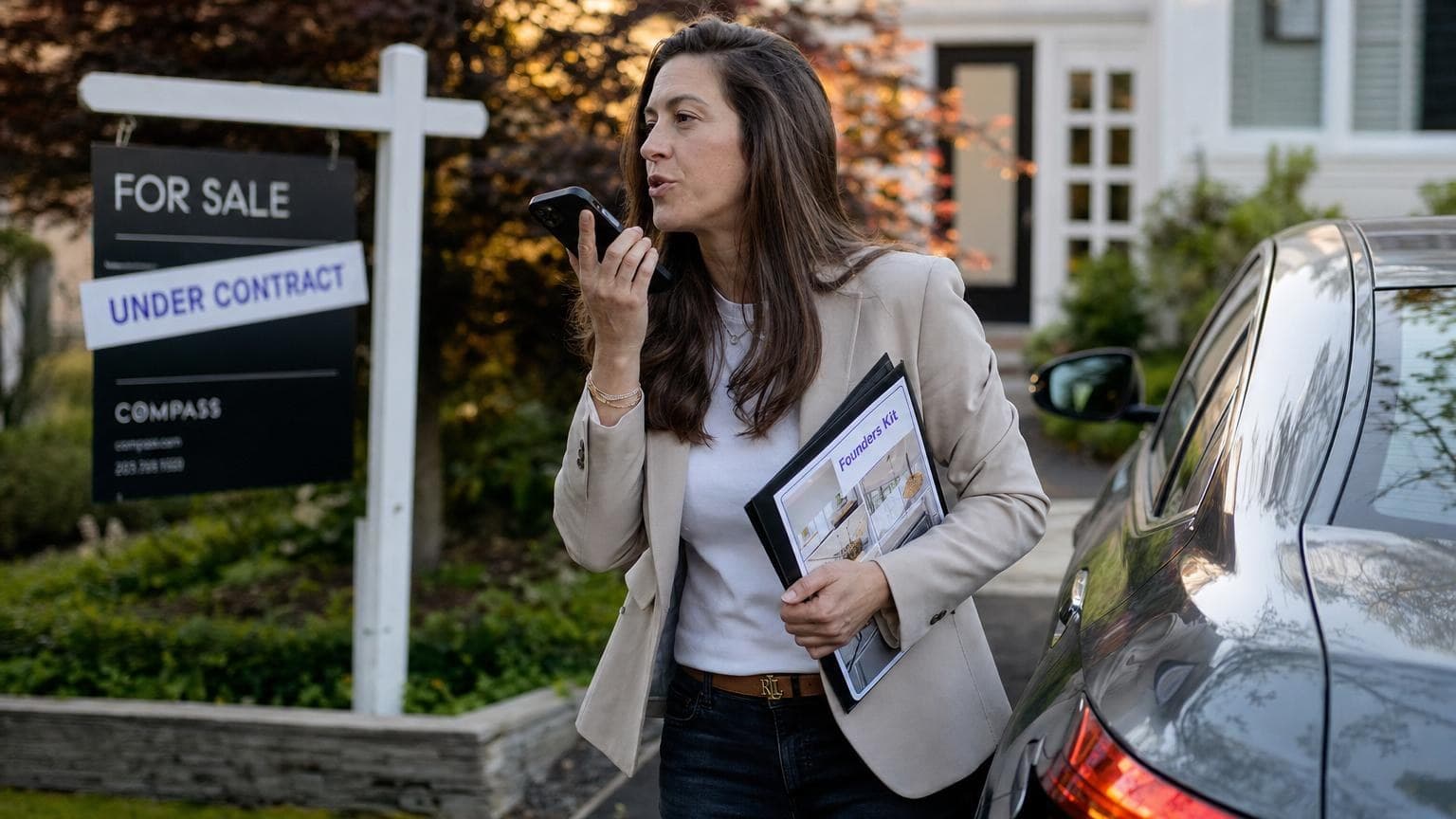
Here's what actually works. The showing ends, you're walking back to your car, and you talk. Not type, talk. "Just showed 14 Oak Street to the Millers. They loved the kitchen, worried about the commute, want to see something closer to downtown. Follow up Thursday." Thirty seconds, done, before you've even started the engine.
That's the idea behind a conversational CRM. You tell Kit what happened the way you'd tell a colleague, and Kit logs the lead, updates the pipeline, and sets the follow-up. No forms, no dropdowns, no deciding which stage this goes in. I built Founders Kit this way because I watched too many good leads die in the gap between "I should write that down" and "I actually did."
What we learned: the note you take in the driveway is worth ten times the note you try to reconstruct at 9pm.
A Real Estate CRM Should Fit in Your Pocket, Not Your Office
This is really a mobile problem wearing a CRM costume. If a CRM for real estate agents only lives on a desktop, it's already failed the job, because agents don't work from desktops. They work from cars, curbs, and open houses.
I wrote before about managing your pipeline from your phone, and nowhere does that matter more than in real estate. You need to check a lead's history in the elevator before an open house, not after it. You need to log a phone number a seller just gave you before you lose the sticky note it's written on.
What we learned: the agents who keep their pipeline current aren't more organized than everyone else. They just use a tool that works standing up.
Why a CRM for Realtors Lives and Dies on Follow-Up
Real estate deals die from silence, not rejection. The buyer who "wants to think about it" needs a nudge in four days, not four weeks, and that only happens if the follow-up gets logged the moment you promise it, not remembered later that night.
"Remind me to check in with the Millers Thursday about the downtown listings." Say it once, walking to your car, and it's on your calendar. You don't need fifteen automation rules. You need a real estate CRM that remembers what you said you'd do.
The bottom line: a CRM for realtors earns its keep by catching the follow-ups you'd otherwise lose to the next showing.
Give Your CRM the Same Job You Have: Keep Moving
You got into real estate to show houses and close deals, not to become a part-time data entry clerk. The right CRM should disappear into the rhythm of your day - showings, drives, calls, showings again - instead of demanding a separate rhythm of its own.
If that sounds like what your pipeline's been missing, take a look at Founders Kit for real estate agents. It's built for agents who log deals from the car, not from a desk.